Showing posts with label News. Show all posts

Friday, 7 March 2014

In the film Terminator 2, the T-1000 was made from a liquid metal that could change into any shape it wanted. Although this may seem far-fetched for a real robot, researchers think they have a found a way to manipulate liquid metal, achieving the beginnings of what we see in the film.

Normally liquid metal is associated with the toxic element mercury, which means it is a definite no-no for making a robot out of it. However Lei Sheng, Jie Zhang and Jing Liu at the Tsinghua University in Beijing have employed the use of a gallium-indium-selenium alloy, which at room temperature exists in a liquid state. It has a melting point of only 50 degrees fahrenheit.


The research team were able to move the alloy around in its liquid form by putting it in water and applying voltage.By controlling the direction and intensity of the current, they successfully produced tiny liquid metal spheres on the surface of a water droplet. These metal droplets could then be moved or even merged with other droplets by changing the voltage source to different locations.

Monday, 3 March 2014

Is the Internet Of Things nearly complete? We have the smart TV, Refrigerator, Kettle and Cooker. The list goes on. Has there been a massive impact on our lives? One firm’s idea may clean things up a bit. Cloudwash is the prototype from London-based technology company Berg, whose business involves assisting other companies to connect their hardware.

The company created Cloudwash as part of research into there own platform. They reverse-engineered a Zanussi washing machine, connected it to the Internet and then created a different user interface for the device and a companion app.


Berg said in a blog post introducing the device, “Cloudwash represents an approach to thinking about connected products which isn’t reflected in the current crop of connected things.” They suggest that most connected white goods will either duplicate their existing controls inside an app, or embed Android OS in the product to run applications.
If there’s one thing most all of us in the United States know all too well by now, it’s this: smartphones are not cheap. And while they’re not cheap, there’s a reason most of us have them – and that’s because they’ve basically become an extension of ourselves. We do everything with our smartphones. They’re our video game consoles, our cameras, our mini-computers, and our lifeline to the rest of the world.

But sadly, not everyone can afford a smartphone. Some people can’t even afford a phone. You see, we’re used to paying high-dollar amounts both for smartphones and the data plans that come shackled to them – but a lot of people, in a lot of under-developed places around the world, can only imagine what it’s like to have a smartphone at their beck and call. All too aware of this issue, the folks at Mozilla are trying to do something about it and would like to level the playing field a little bit. That’s why they’re developing a $25 Firefox smartphone for individuals in under-developed countries.


Could This Be The Start Of A New Positive Trend?

Mozilla will be working with Spreadtrum Communications to make this low-end smartphone a very real possibility for people in the world who otherwise wouldn’t have the ability to own their own smartphone.

Microsoft Wants Better Security Than Password

Posted by Dead Skull on 05:37 with No comments
Security is the biggest issue for technology users today. From online passwords to passwords and/or passcodes for devices – we there are always people on the lookout for a flaw so that they can take advantage of unauthorized access. And Microsoft is dead serious about finding something better than passwords to keep users secure.

According to Dustin Ingalls, group program manager for Windows security and identity, “We have to solve this, ideally in a standard way across industry because the ecosystem will be better off if we can solve it for all devices and services users come across daily.” (Source)


I think we can all agree that the issue has to be solved, and that if a standard can be found that satisfies the entire industry, that would be great. Of course, ideal doesn’t always happen in real life!
According to sources, Sony’s rumoured virtual reality headset is near completion and is nearly ready to be unveiled. The little bird, who wants to remain anonymous for obvious reasons, told TechRadar:

“The quality and resolution are really, really good. People will definitely be impressed with what Sony’s built”.


Sony’s competitior Oculus Rift has been releasing its own device to developers in stages but it seems that Sony is keen to perfect its new produuct before releasing anything. The rumour is that the headset will be unveiled at the GDC 2014 event, which will be held in San Francisco in March.

So watch this space; virtual reality could be coming to a PS4 near you very soon!
3D printing has opened up worlds to the average person – given he could afford a personal 3D printer. While it certainly cannot be called a household item yet, a 3D printer is not that hard to come by these days, and you can create practically anything from guns to little figurines of yourself to horse shoes. Heck, even Walmart and Asda are offering 3D printing services!

Of course, what is accessible to the individual is also available to commercial entities – perhaps even more so. In the case of 3D printing, big brand Mitsubishi is entering the arena by selling metal 3D printers in North America. You might not think much about this initially, but the metal 3D printer, dubbed Metal Laser Sintering Hybrid Milling Machine, LUMEX Avance-25, is not meant to be installed in one’s workshop. Instead, this beast is targeted at commercial grade applications.


For the tech gobbledygook:

The only machine in the world which realizes one-machine one-process manufacturing of complex molds and parts using fusing metal laser sintering (3D SLS) technology and high-speed milling technology. The printer melts metal powders and sinters with laser while surfaces are milled in high speed to form metal parts with complex surface shapes.

Sunday, 8 December 2013

Get A HUD For Your Smartphone’s GPS

Posted by Dead Skull on 11:43 with No comments
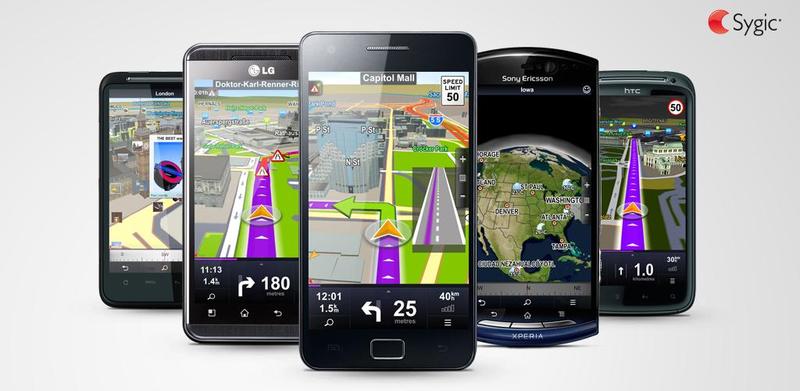
If you would like to have a futuristic navigation HUD on the windshield of your ride, then you should check out Sygic’s GPS app!  Almost all smartphones offer free GPS navigation nowadays, but unless you have a smartphone mounted to your dashboard, looking down at your phone for navigation can be awkward, not to mention, potentially very dangerous.
Sygic HUD
The very popular GPS navigation app Sygic, has a solution: Reflect the navigation data onto your windshield. Sygic is launching a heads-up display (HUD) interface on its iPhone and Android applications, with no external gadgets required.
You just need to place your smartphone underneath your windshield and the high-contrast HUD interface on Sygic’s app will be reflected on it, giving it the illusion that your car has a futuristic, smart windshield. The app highlights the most important navigation information, like the distance to your next turn, and it works in combination with the app’s voice navigation system.
Garmin has released a $150 gadget that enables a similar HUD feature on its $50 mobile app. Sygic’s HUD, in comparison, weighs in at just $5 (plus extra for more features).
Sygic is one of the most popular navigation apps in the world, with 33 million users and $18 million in revenue this year.  The Bratislava, Slovakia based Company has been around since 2004 and while the company has a 3 million+ user base in the U.S. it is not as well known as other GPS solutions fromTomTom and Garmin or the free apps from Apple and Google.
HUD
Unlike most GPS apps, Sygic downloads its maps onto your phone so you can use its navigation features even without a cellular connection, then the app just relies on your phone’s GPS. The company also differs from many of its competitors by taking a freemium approach: Basic navigation is free, but you have to pay $29 for voice guidance and other premium features. Michal Stencl, Sygic’s founder and CEO, said in a recent interview, “We have a different strategy [from competitors], our business model is very transparent…We don’t want to collect info about the users, that’s why we ask for micropayments.”
All in all, for only a few bucks you can get a pretty cool piece of tech for your transport.  I for one, may just give it a try.
The U.S. law that currently prohibits amateur gunsmiths from producing undetectable guns, is due to expire on Monday, 9 December.
There is much speculation as to what will happen because the lawmakers are struggling to renew the law for yet another time. The Undetectable Firearms Act was passed in 1988 due to fears of functioning plastic or ceramic guns. Since then it has been renewed twice, once in 1998 and again in 2003. Some people want to extend this law, making it harder for gunsmiths to produce guns like theLiberator.
Liberator plastic 3d printed gun
New York representative Steve Israel is campaigning, not to just reauthorize the law but also to change it. He plans to reintroduce is reform bill just at the time when the House plans to vote on renewing the old one.
He explains his stance saying: “I am a huge fan of 3D printers. I think that they will transform our economy and technology, I just don’t want to make it easier for criminals and terrorists to get guns through metal detectors.”
According to Israel’s spokesperson, his bill requires that two or three major components of a gun be made from metal, steel or some other detectable material.
However this bill is not popular with everyone, with some feeling that an extended law would just regulate hobbyist gun makers or even 3D printing in general.
Cody Wilson, the founder of 3D-printed guns organization Defense Distributed and creator of the Liberator gun said: “The Undetectable Firearms Act was always a kind of a fake law that never really affected anyone’s activity, now it’s just used for bad faith roundabout gun prohibition, just because these people are scared that digital manufacturing makes more people have guns.”
In response Israel said: “That’s just a ridiculous stretch. Nobody is regulating 3D printers in this bill. Nobody is regulating the ability of people to acquire digital blueprints in this bill. All this bill does is to stop, to make it harder for people who want to do us harm to get guns through metal detectors.”
So as the House and Congress both work on bills to reauthorize the Undetectable Firearms Act of 1998, let’s just hope the law doesn’t expire without renewal or reformation. Otherwise anyone would be legally allowed to possess, produce or sell an undetectable 3D printed plastic gun, capable of firing bullets.

Iron Man Suits Coming To US Army

Posted by Dead Skull on 11:37 with No comments
As one of the many fans who watched Iron Man 3 over the last summer, I wondered after leaving the theater how long it would be until someone actually developed a suit based off of the invincible Iron Man armor. Well, it only took me about 6 months to get my answer. Apparently, the US Army is already designing their own version of Tony Stark’s armor. I guess the whole Iron Patriot idea in the movies wasn’t so far fetched after all.
The US Army hopes to create a wearable exoskeleton that can be attached to soldiers before they leave to carry out their marching orders. They are calling this armor TALOS, which stands for Tactical Assault Light Armor Suit. Something tells me the suit will be anything but light.
Iron Man Suits Coming To US Army
Just What All Can This “Iron Man” Armor Do?
To begin with, the Army wants the armor to drastically increase and augment the strength of human soldiers. Lt. Col. Karl Borjes, who serves as a Science Advisor in the US Army, had this to say regarding the armor:
“The requirement is a comprehensive family of systems in a combat armor suit where we bring together an exoskeleton with innovative armor, displays for power monitoring, health monitoring, and integrating a weapon into that…It’s advanced armor. It’s communications, antennas. It’s cognitive performance. It’s sensors, miniature-type circuits. That’s all going to fit in here, too…”
If this armor is successful, soldiers would theoretically be able to walk through gunfire and not be stopped – unless of course a bullet hit a main circuit or something. Surely they will have all those kinks worked out, though.
The Army plans to work with MIT and other organizations to help them perfect this armor. If all goes according to plan, the Army hopes to have the suits ready for battle in 3 years.
It certainly sounds as if the US Army will have a completely different look and feel in the coming decades. Techbeat recently reported that robotic soldiers might very well outnumber human soldiers by 2023, and this news of Iron Man like armor makes that seem like a real possibility.
Whether only certain soldiers will wear the armor in special situations is a question that will have to be answered at a later time. Another question that remains to be answered is if this armor will allow soldiers with physical disabilities to participate in the military, since it would be the suit doing most of the work.
What are your thoughts? Do you think this is a step in the right direction, or is the US Army focusing entirely too much on advanced technology?

Thursday, 1 August 2013

First 3D Printred Rifle Test Fired

Posted by Dead Skull on 10:20 with No comments
Missed all the controversy surrounding 3D printed weapons and their potentially disastrous effects or not, depending on who you’re asking? Rest assured, for we now have what is believed to be the world’s first 3D printed rifle being successfully test fired.

Well, okay, maybe not 100 percent successfully, given that its barrel split after it fired the first round, but it did fire instead of just blowing up, so that should count for something. The rifle, named the Grizzly, is shown in action in a video posted on YouTube.

First 3D Printed Rifle Test Fired
The video was uploaded by a user named ThreeD Ukulele, who apparently is passionate about creating 3D models of musical instruments and especially, you guessed it, of the ukulele. The clip shows the Grizzly clamped to a workbench and a man, who is presumably the YouTube user, firing it from a safe distance, with a piece of string.

Tuesday, 23 July 2013

Motorola Moto X first press images leaked

Posted by Dead Skull on 02:12 with No comments

The press render images for the highly anticipated handset from Motorola are featured above after leaking online, tech site TheUnlockr reports.
as well as rumoured specs of a 720p 4.5-inch display, 1.7GHz dual-core Snapdragon S4 processor, 2 GB of RAM and 16GB of internal storage.
According to pocket-lint, Evan Blass - the man behind @evleaks has stated the Moto X is, "Designed not as an early adopter's phone, but instead as an everyman phone, the X is the new Motorola's first attempt to push some serious volume under the new-ish owner Google."
Motorola have sent out press invites this week for a private event in New York on August 1st.
The event for the Moto X, expressed as being "No sSage. No Crowds," will be held in five separate sessions and the news given at the sessions will be released from embargo at 3PM.

It has been rumoured for several months now that Apple is looking to implement the technology. However, the rumours have rarely been backed up by hard facts, until now.
The US Patent and Trademark Office on Wednesday published a patent application filed by Apple. It identifies a way of scanning fingerprints using a sensor that is embedded into a device’s screen.
The technology is based on the work of mobile security firm AuthenTec. Apple acquired the company in July 2012.
The filing suggests that the scanner would be embedded into the LCD display and used as a secondary input method.
In recent months, Apple and the other major smartphone makers have all been requested by US authorities to make their devices less attractive to criminals.
The iPhone 5s is also rumoured to include a faster A6 processor, improved graphics, 2GB of RAM, an upgraded LTE radio and a 12-megapixel camera with dual-LED flash.

Apple buys two mapping companies

Posted by Dead Skull on 01:56 with No comments

On Thursday, the company bought Locationary, a crowd-sourced local data company. Then on Friday, the company acquired city-navigation app HopStop.
Both companies were bought for an undisclosed sum by the the iPhone maker.
Apple has been criticised in recent months for its weak mapping app Apple Maps. It replaced Google Maps as the standard map app when the company introduced iOS6.Locationary focuses on ensuring that business listing data is accurate. That includes that the business listed is where it says it is, as well as that it is still open.
Its rivals currently acquire business listings from the likes of Yellow Pages and Yelp.
The company likely bought HopStop in order to improve Maps’ navigation and mapping tools.
Apple refused to comment on the acquisition, saying in a statement: “Apple buys smaller technology companies from time to time, and we generally do not discuss our purpose or plans”.

Monday, 22 July 2013

These 3D Printer FFVIICharacters Are Badass

Posted by Dead Skull on 08:51 with No comments
While 3D printers might be coming on leaps and bounds in the quality that they're able to output, we're still a far way off from them becoming the way that most people produce figures or models - because the level of detail just isn't there yet. However, when it comes to late 90s video game characters, 3D printing is more than capable.
Take for example, these fine Final Fantasy VII characters, complete with paintbrush hands and all.


  1.  

It's ironic really, that while the battle sequences of the game were far superior in graphical quality and the cut scenes even more so, it's the crude (by modern standards) chararacter models that are most memorable - perhaps because they told the story so well despite their lack of detail.
And it's that lack of detail that lends them perfectly to 3D printing. It would be great to see some larger builds based in the Final Fantasy VII universe. Perhaps a chocobo or one of the weapons?
Really, I would love a set of these. If any of you has a 3D printer, want to hook me up with a few?
These days you get less and less for your money, sadly that seems to also be the case with games. Most current releases retail at extortionately high prices whilst only delivering 8-10 hours of gaming, that’s not exactly bang for your buck. Thankfully there are some quality titles out there that can supply you with literally hundreds of hours of gaming, if you like to get value for money out of your gaming habits (let’s be honest, who doesn’t) then read on.

Monday, 15 July 2013

Google Making Android-powered Gaming Console?

Posted by Dead Skull on 19:55 with No comments
Although there has been no official confirmation, the Internet is abuzz with reports that software giant Google aims at getting a slice of the hardware market, first by releasing an Android-powered gaming console.
The rumor was first reported by the Wall Street Journal and has been spreading across the world wide web, yet Google refuses to confirm or deny the story, which also mentions plans to develop a smartwatch.

Google Making Android-powered Gaming Console?
The Wall Street Journal cited unnamed sources as saying that besides an Android-powered gaming console and a smartwatch, Google is also planning to release a revamped, improved version of the Nexus Q. The Nexus Q set-top media streaming device was first announced at last year’s I/O conference but was never released for sale.

Mozilla’s Smartphone OS Launches in Spain

Posted by Dead Skull on 19:51 with No comments
One of the world’s leading Internet browser providers has joined the smartphone business with a new operating system. Mozilla’s smartphone OS was officially released in Spain.
First details about the operating system emerged at the Barcelona Mobile World Congress in February and Mozilla has just released the first two smartphones equipped with the new Firefox operating system.

Mozilla’s Smartphone OS Launches in Spain
The two smartphones, a ZTE Open and an Alcatel OneTouch Fire, are only available in Spain for the time being. Mozilla partnered with Telefonica on the project, which aims at making available a series of more affordable smartphones to the general public.

Google Whitespace Broadband

Posted by Dead Skull on 19:48 with No comments
Google has been granted official permission to develop its plans in the USA to use portions of the unused television broadcasting spectrum for broadband Internet access.  This method is typically used for remote areas where traditional cable hookups cost far too much money.

White Space Database called “TV white space,” are those unused broadcasting frequencies that have been eyed up in the last several years as a potential way to distribute broadband Internet to users who can’t get it because they live too far away from cities and towns where appropriate communication infrastructure and facilities exist.

Google Whitespace Broadband
Google has been seeking certification from the Federal Communications Commission (FCC) to become a certified database administrator for those segments of  TV white space across the United States of America.  That final certification from the FCC has now been confirmed as Google’s database of white space has recently been accepted by the commission, according to a post by Alan Norman, principal of Google’s Access team, on the Official Google.org Blog on June 28th 2013.  This certification of Google as a database administrator means that the company will be able to provide information to service providers about which areas of the TV white band will be available for providing Internet use.
Unhappy with your current Internet broadband speed? Well, fingers crossed for this new project to succeed: the European Union and Japan have joined forces to build 100Gbps fiber optic Internet, about 5,000 times faster than the average broadband speed in Europe – 19.7Mbps.
The project is called STRAUSS and is just one of a total of six research projects that the EU and Japan have partnered for.

More details about the six projects were recently unveiled by the European Commission. The partnership is aimed at finding ways to increase the efficiency of data transfer networks, given the massive online data explosion. The trend is expected to continue over the next ten years.

space1
According to a press release from the European Commission, up to 1.7 million bytes of data are generated worldwide every minute. Moreover, the volume of data traffic has already doubled since last year and is believed to grow 12 fold by 2018, but current networks are not able to keep up with this growth rate.

Garmin Produce Sat-Nav App For Head-Up Display

Posted by Dead Skull on 19:38 with No comments
The satellite navigation firm Garmin has produced a portable head-up display (HUD), that projects directions directly on to a windscreen.
It works by combining a smartphone and a Garmin app to generate navigation information. The HUD projects directional arrows, distances, current speed and speed limits on to the glass.

Garmin portable head-up sat nav
In order for it to work, the HUD’s reflector lens is attached to the glass of the windscreen. Brighness levels are automatically adjusted so that the information is easy to read both during the day and night.
As well as visual directions, the navigation system also provides voice prompts through either a smartphone speaker or the car’s stereo.